
Category: Community

  • Next Lens of Equity Coming in 2025: This is More than a Conversation

    Next Lens of Equity Coming in 2025: This is More than a Conversation

    November 15, 2024

    BY TAMAR JACKSON

    Senior Director of Community Engagement, WorkForce Central

    The Pierce County Community Engagement Task Force, driven by WorkForce Central’s passion for keeping DEAI (Diversity, Equity, Accountability, and Inclusion) at the forefront of what we do, is excited to bring you the 2025 Lens of Equity Summit at the Greater Tacoma Convention Center on Thursday, February 20, 2025. This time, we’re doubling down on advancing racial equity and justice, ensuring that our community remains at the core of every conversation.

    This summit will build on our ongoing mission to confront the racial disparities embedded in the systems that have strategically devalued our communities, therefore shaping our lives here in Pierce County. Real change begins with the community—amplifying the voices of those most impacted and uplifting our residents and small businesses to lead the push for equity. We focus on ensuring everyone, especially those from historically undervalued groups, has a seat at the table and that their experiences drive the movement for justice.

    We will have open and honest conversations to bring our communities closer, challenge racial inequities, and develop collective solutions. The power to transform our systems relies on each of us—within our neighborhoods, organizations, workplaces, and culture. The Lens of Equity Summit is a space for reflection, dialogue, and action, highlighting that community-led efforts are essential to achieving racial equity.

    Join us as we build a more just Pierce County. Tickets go on sale October 21. Click the button below to learn more and to sign up for updates about this event. This is more than just a summit—it’s a movement for lasting change. We hope you’ll be part of it.

  • Don’t weaponize the word ‘woke’; all parts of Black History are an essential part of American History

    Don’t weaponize the word ‘woke’; all parts of Black History are an essential part of American History

    February 1, 2023

    By Dr. Shawn G. Willis

    LEARNING AND DELIVERY AND DESIGN PROFESSIONAL, WASHINGTON STATE

    Dr. Martin Luther King Jr. provided our nation with an inspiring and motivational speech that will echo through the ages as long as all people from different backgrounds are not treated equally and indeed offered opportunities based on that simple premise. Rosa Parks became an icon for refusing to give up her seat on a Montgomery, Alabama bus on December 1, 1955; Congress recognized Rosa Parks as the Mother of the Civil Rights Movement in 1999. President John F. Kennedy: a supporter of the Civil Rights Movement, tragically lost his life by an assassin’s bullet in November 1963.

    All three great Americans made great and ultimate sacrifices in the quest for all to be treated equally in the eyes of the law, but they were not the only ones who paved the way for them. Accurately learning about the inventions, contributions, and sacrifices of people of color, not just the ones the culture has deemed ‘safe and significant,’ helps to instill pride while acknowledging that more than one race is responsible for the greatness of the United States of America.

    Dr. Martin Luther King Jr. was born on January 15, 1929, and is the most known member of the Civil Rights Movement, which began in 1955. Dr. King began his ministry in 1954 at Dexter Avenue Baptist Church, taking over from another Civil Rights leader who was fighting for Civil Rights when it was not popular to do (even by his own people), Dr. Vernon Johns (April 22, 1892 – June 11, 1965). Long before Rosa Parks refused to give up her seat, Dr. Johns was fighting for equal rights on transportation and inspiring others like his niece Barbara Johns, who filed a lawsuit that was one of the five cases combined in the Brown vs. Board of Education leading to the desegregation of public schools by the United Supreme Court. You can see more about him in the television film Road to Freedom: The Vernon Johns Story (1994). James Earl Jones portrays him. Unfortunately, most of us may not know about the people mentioned because the ‘culture’ does not communicate much about them, and some of the organizations within the institutions of education and politics reinforce the ‘work’ of the culture by enacting policies to prevent it.

    Nine months before Rosa Parks was ‘chosen’ to be the face of the bus boycott, another young lady was denied her rightful place in history for having the courage to say ‘no’ for not being treated fairly on a segregated bus. Her name is Claudette Colvin, and she was 15 years old when she was arrested on March 2, 1955. She was ‘manhandled’ off the bus, handcuffed, and treated worse than Rosa Parks. Although she is still alive today, her story and rightful place in history are not told because a committee that included Dr. King decided to wait for a ‘better’ case to pursue. After all, the incident involved a minor and circumstances beyond her control. Nevertheless, learning about her ordeal can help us understand some attitudes and behaviors between specific demographics and law enforcement. Read her story in ‘The Girl Who Acted Before Rosa Parks.’

    Between June 12, 1963, and January 26, 1969, five champions of Civil Rights lost their lives, but only three are talked about, depending on where you went to school. The three most commonly talked about are Dr. King, President Kennedy, and his brother Robert. But two other champions interestingly suffered similar fates six years apart Medgar Evers (1963) and Washington State’s version of him, Edwin T. Pratt (1969). Both were assassinated in front of their homes, and for nearly 30 years, both cases had remained unsolved (Edwin Pratt’s still is) even though the assailants were arrested; laws that allowed for all white juries made way for them to be set free. Why is this important, you ask? It’s because history will, in some fashion, continue to repeat itself if we don’t strive to understand how the dynamic structure of racism affects our culture, institutions, and the racial socialization of individuals.

    If we don’t want history to continue repeating itself, we have to provide our current and future leaders from all backgrounds with an accurate account of the Civil Rights struggle, or many will continue to believe it didn’t really start until the 1960s and that we are ‘much better than where we started.’


    REFERENCES

    MLK’s struggle against white supremacy continues even today | Guestview (yahoo.com)

    Dec 1, 1955, CE: Rosa Parks Arrested | National Geographic Society

    The Girl Who Acted Before Rosa Parks | National Women’s History Museum (womenshistory.org)

    Murder of Medgar Evers – Medgar Evers College (cuny.edu)

    Edwin T. Pratt (1930-1969) • (blackpast.org)

    He Killed Edwin Pratt | Seattle Weekly

    Civil Rights Martyrs | Southern Poverty Law Center (splcenter.org)

    Barbara Johns Biography

  • Unearthing Our Roots

    Unearthing Our Roots

    December 7, 2022

    BY KRISTA R. PÉREZ

    LEAD CONSULTANT, PÉREZ CONSULTING

    When asked, Where did you find the time to write a book? I responded with, during the first 6 months of my daughter’s life. There is something about the tension that exists with being needed so much by a fresh out-of-the-womb newborn and the euphoria of just having birthed a being that created the ideal environment for me to finally write this book. This book had been living in my iPhone notes for far too long, and it was time for it to be shared with folks in a way that made my experiences and strategy accessible and real.

    In this book, you will find bits of my personal experiences, wins, and lessons in building community, as well as the strategy that I developed throughout various settings with various communities. In this book, I will commiserate with you just a little, but mostly I will call you to activate the skills that you have acquired to move equity forward and to invest in and strengthen our communities.

    To learn more about Unearthing Our Roots and upcoming events, please read below:

    On Nov. 1, 2022, Blue Cactus Press released Unearthing Our Roots: Restorative practices for cultivating spaces of belonging by community organizer and entrepreneur Krista R. Pérez. Unearthing Our Roots is a call to action in which Pérez rallies advocates, activists, and leaders from historically marginalized groups to implement transformative and healing practices within their communities. Pérez calls readers in, asking them to unearth and uproot anti-Black, racist, ableist, and biased values that fracture relationships in and surrounding our communities. With decades of lived experience and a multidisciplinary approach, Pérez presents guided journal prompts within the book to guide readers through examining intentions, strategies for unraveling harmful biases and behaviors, and transformative and restorative practices for communities of historically marginalized groups at both micro and macro levels.

    “Krista Pérez has written a marvel of a book—part memoir, part community organizing guidebook—that will touch and transform many lives,” writes Renee Simms, author of Meet Behind Mars and professor of African American Studies/Creative Writing. “Within these pages, I hear the scholarship and wisdom of bell hooks, Linda Tuhiwai Smith, and others, but written with the clarity of Pérez’s voice and in a language that will speak to younger generations.”

    On Nov. 30, at 6 pm, Blue Cactus Press and Pérez hosted a free, virtual workshop utilizing guided journal prompts from Unearthing Our Roots. Pérez facilitated the workshop, guiding participants through exercises in which they examined their intentions, brainstormed strategies for unraveling harmful biases and behaviors, and imagined transformative and restorative practices for communities of historically marginalized groups.

    This event and the publication of Unearthing Our Roots were partially funded by the Tacoma Arts Commission. A series of workshops for Unearthing Our Roots is planned for next year.

    Krista R. Pérez aims to share her story, all parts of her story, including her softest and strongest parts, her sacred nature, the joy of motherhood, and her deeply rooted cultural values, to create spaces for Women of Color to show up in all capacities. Krista is also a proponent of integrated leadership, in which we bring all parts of ourselves to our professional workspaces. By making our whole selves visible, we learn to value our whole selves, and others, as others and community members.

  • A Reflection on Hispanic Heritage Month

    A Reflection on Hispanic Heritage Month


    October 4, 2022

    BY CARLOS A. ORTIZ

    SOCIAL ENTREPRENEUR, COMMUNITY LEADER, AND FILMMAKER AT ZETA-MAYA ENTERTAINMENT

    Warning: You may be offended, triggered, or insulted by what follows.

    Words possess a lot of power, and their usage can yield a tremendous amount of influence and emotion.

    I remember many moons ago, I read a short story, or it may have been a poem, about a young man sharing the awkwardness he felt when having to fill out the race and ethnicity section of a form because he felt that none of the categories exactly fit who he was. It really made me think about my own race, ethnicity, identity, and the labels I would allow to be placed upon me from that point on. I became very conscious about myself and who I identified as.

    I never really thought about it before, but I became very aware of this during this time because I also began learning about Meso-American, Pre-Columbian, and Chicano history, as well as my own family history. Around the same time, one of my teachers made us do a family tree and interview our parents to learn about our own family history. I really learned a lot about myself, my lineages, and that fact that I am Maya (hence the name of my business, Zeta-Maya Entertainment), with some European ancestry as well. At times in the past, I felt like a walking and living contradiction. Was I American, Central American, Chicano, Latino, Hispanic, none or all of the above?

    I began doing research. I looked it up in various dictionaries (which wasn’t really much help), read books and articles, and asked my teachers what the words “Hispanic,” “Latino,” “Latin-American,” “Mestizo,” and “Chicano” meant. I received several different answers; some of them even seemed contradictory or circular (for instance, they would say that a Hispanic was a Latino, or a Latino was a Hispanic). It didn’t make any sense, they didn’t really explain it well, or I couldn’t quite wrap my head around it. So, I continued researching and looking for answers. It has now been over 30 years, and I still don’t exactly know. Most recently, I’ve researched new terms that have entered the modern lexicon, like “Latinx,” “Latine,” and “Latin@,” for instance. Mostly because people have asked for my opinion and advice, or I’ve engaged in community conversations about these terms. Ultimately, I’ve decided that your guess is as good as mine.

    One word, in particular, stands out because it is used to represent a month-long celebration of my culture, heritage, and community, and essentially coined by the U.S. censu—that word is: “Hispanic.”

    According to the 2010 census, it notes that Hispanic/Latino identity isn’t a race but a category on the form to describe origin. Excellent, thanks for adding to the confusion!

    Race, ethnicity, nationality, heritage, origin, and several other terms have been used loosely, interchangeably, and even incorrectly. There seems to be so much confusion and misunderstanding over these terms and their usage. I’ve done a considerable amount of research, cross-referenced, and spoken with professors and scholars on the definitions of these words, and I’m still confused and don’t fully understand what they all mean. I have a basic understanding and can explain them to people, but sometimes it feels like I’m running around in circles when trying to define and explain them. So, I’ve kind of given up on trying to understand and explain to people what they mean. I end up telling them to do research and try to figure it out on their own in order to come to their own conclusions. A cop-out? Maybe, but your education and understanding of the world is up to you, not me, and I’m no expert or academic. Shoot, even the “experts,” academia, and scholars seem to disagree. Go figure.

    Growing up, I kind of felt like I lived in no man’s land. I wasn’t quite considered American, or at least the typical American with blue eyes, blonde hair, and white skin, and I wasn’t considered from where my parents are from because I wasn’t born there. In Spanish, we say “ni de aquí ni de allá,” meaning “neither from here nor there” in English. So, I wasn’t really accepted here in America as truly American, and I wasn’t accepted and considered from where my parents were born and raised. I no longer seek external validation and have even considered coming up with my own term, but for now, I am comfortable with the label “American Latino.” Maybe we can come up with something like LGBTQ+ to represent our diversity and complex cultural history. Something like LAMB+ (Latino, American, Multicultural, Brown, plus).

    It’s been quite the journey in self-discovery, self-analysis, and introspection, to say the least!

    A Brief History of the Word Hispanic

    It’s interesting to note that Mexicans, the dominant Hispanic national origin group, were classified as white until the census of 1930 added a “Mexican” race category due to a rise in immigration that dates back to the Mexican Revolution in 1910. Mexican-Americans lobbied to eliminate the term in the 1940 census and continue classifying them as white, which provided them with more legal rights and privilege. In my research, I came to find out that this was the main reason Mexicans, Latinos, and Hispanics were no longer being classified as White or Caucasian because they wanted to segregate and separate them in order to deny them the same rights and benefits during the great depression because several Americans at the time felt they were stealing their jobs and taking resources they felt they shouldn’t be receiving. Sound familiar?

    Then, in the 1970 census, a portion of Americans were asked if they were Mexican, Puerto Rican, Cuban, Central or South American, or of another Spanish origin, which was a precursor to the universal Hispanic question that would be included later during the 1980 census. Later, the 2000 census added the word “Latino” to this question. Adding to the confusion is the fact that the Hispanic category is described on census forms as an origin and not a race. In fact, Hispanic can be of any race. Wait, what?

    Initially, Hispanic Heritage Month began as a weeklong celebration back in 1968 when President Lyndon Johnson was president. Then, in 1988, President Ronald Reagan extended the week to a full month, from September 15th through October 15th, keeping the September 15th start date because it coincides with the national independence day of Guatemala, Honduras, El Salvador, Nicaragua, and Costa Rica. Mexico celebrates on the 16th, Chile on the 18th, and Belize on the 21st. There are over 20 countries around the world that identify as Latino (or Latinx or Latine, if you prefer).

    In the 1930s, Latinos living in the U.S., regardless of their place of birth or family origin, were all noted as “Mexican” by door-to-door U.S. Census Bureau counters. It wasn’t until the 1970s that Latinos were asked by the agency to self-identify as either “Mexican, Puerto Rican, Cuban, Central or South American, Other Spanish” or “No, none of these.” Some other terms that were considered were “Brown,” “Latin American,” and “Latino.” Some people hated the term Hispanic because they felt the term was forced upon them by the U.S. government. The word is an English translation of the Spanish word “Hispano,” which means a person whose cultural traditions originate from Spain. The problem with this word and definition is that it excludes Brazil and Native Americans or Indigenous people because their culture doesn’t derive from Spain or the Spanish language. Therefore, it alienates indigenous and Afro-Latino communities that have a deep resistance to the Spanish invasion of the Americas and the Caribbean.

    Are you mentally drained yet and completely confused? Okay, good, welcome to the club!

    We appreciate people embracing our culture, traditions, and communities, but there needs to be programming, education, and activities that raise awareness of our true history, the historical problems we have faced and continue to face, and explore our individual identities and what we feel truly reflects our journey towards justice, equal rights, and accurate representation. Are you up for the challenge?

    This blog post is merely a conversation starter, and we would love to hear your opinion and any fact-finding you’ve discovered and would like to share, and we appreciate any and all comments on this subject.

    For more information on census data and the history of the word “Hispanic,” you can go to PewResearch.org.

  • Building Collaboration, Community, and Hope

    Building Collaboration, Community, and Hope

    August 1, 2022

    Through collaboration and engagement, we continue our efforts to support diversity, equity, access, and inclusion within organizations and the distribution of resources to communities in need. We look forward to continuing our work through the rest of 2022 and into 2023.

    At our latest Collaboration for a Cause event on June 24 in Fife, the Task Force, in partnership with Project Homeless Connect, served 210 people and received 432 referrals for education, training, housing, employment, and more. We would like to thank the many volunteers and organizations that came to help move people out of poverty and into stability and self-sufficiency.

    Task Force volunteers at Collaboration for a Cause: Fife Edition on June 24.

    Our first Collaboration for a Cause event of 2022, held on April 2 in Puyallup, served 91 households and over 200 attendees at the South Hill Mall. Over 40 vendors and service providers came to the event, offering services in employment, education, healthcare, and more. With our partnerships with Goodwill and other community organizations, these events will continue throughout the rest of the year.

    We also continue in our Diversity, Equity, Access, and Inclusion (DEAI) efforts. In May, the Task Force presented at the National Association of Workforce Development Professionals (NAWDP) Conference. Titled Building a Diverse Workforce through a Lens of Equity, the presentation focused on how promoting DEAI in workforce development can serve the community, increase access, and foster growth. We are also planning the Lens of Equity Summit, a full-day event in 2023 that will provide tangible tools and information to organizations so they can move forward and build healthy DEAI frameworks.

    In July, we held our first in-person meeting since the pandemic started. Focusing on Social Wellness Month, we shared updates from our committees, information on upcoming initiatives, and held breakout discussions around three pillars of wellness: social, financial, and physical. We are looking forward to future in-person gatherings in addition to our virtual meetings. Our meetings will begin again in September after our blackout month of August, where Task Force meetings have been postponed to provide a time and space for reflection and self-care.

    Our successes would not have been possible without the help from our community. Thank you for being a part of our monthly activities and helping us grow and continue to bring economic mobility to individuals and families in Pierce County. We look forward to continuing our work in the second half of 2022 to make Pierce County a better place.

  • It’s the Enslavement for Me

    It’s the Enslavement for Me

    June 8,2022

    BY MICHAEL JORDAN

    BUSINESS OPERATIONS SPECIALIST, BLACK COLLECTIVE IN PARTNERSHIP WITH SOUND OUTREACH

    It’s the enslavement for me…

    Headlines rang with the announcement, “Walmart apologizes for Juneteenth ice cream flavor after backlash.”  In the same article, CBS News stated, “The Juneteenth ice cream’s packaging urged consumers to ‘share and celebrate African-American culture, emancipation, and enduring hope.’”

    The age-old saying, “You have to know better to do better,” rings true here. Why was there a backlash? Clearly, the ice cream along with napkins, plates, cups etc. declaring “It’s the Freedom for me” were offensive to descendants of enslaved black people. Unknown source, “Kanye thinks he’s doing what Kendrick is doing.” In this scenario Walmart could be seen as Kanye, “out of pocket.” This could have been avoided through decision makers at Walmart having some key information mixed with compassion. As this holiday is relatively new to some, this blog post aims to highlight some history, examine the present, and inspire readers to explore change for the better.

    A walk down memory lane…

    The emancipation proclamation was signed on January 1, 1863; it did not reach completion until over two and half years later when Texas got in line. Though the law was in place, it took time for Union forces to take control of some confederate strongholds and enforce freedom. This article states:

    In the westernmost Confederate state of Texas, enslaved people would not be free until much later. On June 19, 1865, Freedom finally came when some 2,000 Union troops arrived in Galveston Bay, Texas.”

    The heart of Juneteenth is reflected in the words of Maya Angelou: “The truth is, no one of us can be free until everybody is free.” Juneteenth is a day of cultural connection, reflection, and appreciation.

    In the present day, there are several questions to ponder for those who wish to appreciate and understand this holiday.

    1. How does the fact that it took 156 years for the US government to recognize Juneteenth as an official holiday demonstrate progress?
    2. Why did Texas wait until June? (They wanted one last Harvest.)
    3. Can we prove actual progress for life as newly freed black folks and their descendants?

    Some believe there has been a ton of change and improvement. However, if you research utilizing books like The Color of Law, The Color of Money and The Sum of Us you will learn more than any average American history textbook has to offer. Then google “The Southern Strategy” and you will discover that there is work being done to undermine the positive aims of Civil Rights. Thankfully, this isn’t the end of the story.

    We gon’ be alright!

    The “Know better do better paradox” (this author’s invention) proves that the more people know actual history, the more apt they are to change the present and thereby change the future. The challenge of getting rid of “Zero Sum Thinking” and realizing the power of “The Solidarity Dividend” (terms from Heather McGhee’s The Sum of Us) is at the core of many challenges in the US.

    A 2020 study done in Seattle had this to say:

    We anchor on race in our analysis because holding all other factors constant, ones race is more likely to predict outcomes than other factors on almost every issue.”

    The fact that these studies are being done and shared and impacting policy is a step towards making life better for black people. There are increasing chances for everyone to know better and do better. The Pierce County Community Engagement Task Force is one such place. In the Puyallup area, many are working with community to promote awareness of Juneteenth and the history and reason of it’s being celebrated. The Two Way Racial Healing Project is hosting an event on Juneteenth where people can connect, reflect and appreciate what it took our ancestors to get here, and how we can make a better reality for our children.

    Michael Jordan is the Business Operations Specialist at the Black Collective in Partnership with Sound Outreach, which works to be a place where black businesses of all sizes can realize revenue growth through subsidized services and business literacy support, while having their voice influence change in the economic ecology of Pierce County.

    They are the next step after accelerator programs and are working to be relevant businesses at every phase, helping them build through collaboration and community.

  • A History of Pride: Celebrating Pride Month

    A History of Pride: Celebrating Pride Month

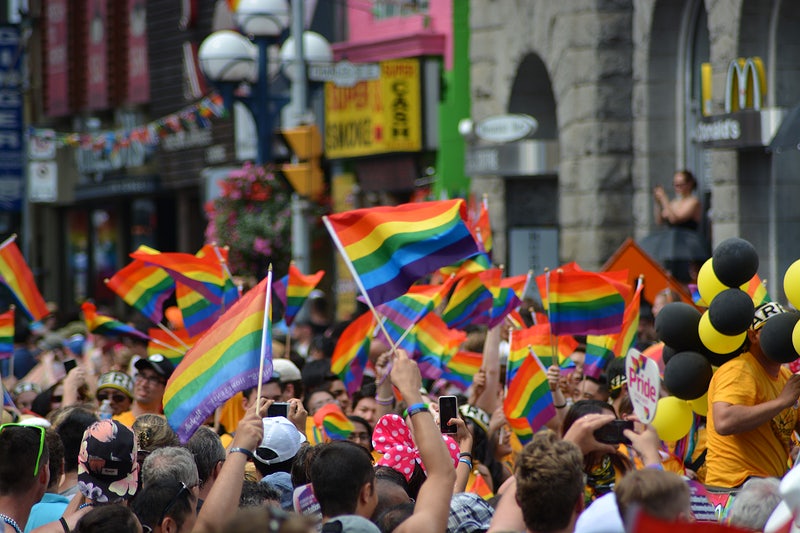
    June is Pride Month, a time when LGBTQ+ communities come together to celebrate the freedom to be who they are.

    The first Pride events were held in June to commemorate the Stonewall uprising in New York City in June 1969, which helped launch the modern gay rights movement.

    Today, Pride is a chance to join together and honor the LGBTQ+ movement’s history. While Pride Month is known for its celebrations, it’s also important to recognize the bravery and advocacy that started it.

    A Brief History of Pride

    Although Pride may appear to be a month of parades and rainbow-themed branding at first glance, its origins are rooted in discrimination and activation. A month after the Stonewall uprising in 1969, the first Pride demonstration took place. The Stonewall Inn, a well-known gay bar in New York City, was a safe space for the LGBTQ+ community.

    Following a police invasion of the bar in the early hours of June 28, 1969, Stonewall patrons fought back – the first of whom were Black and Latina transgender women. Protests occurred throughout the city after years of harassment by authorities, marking a turning point for the LGBTQ+ movement in the United States. On the one-year anniversary of Stonewall, events held to commemorate it became the first spark of what would become Pride.

    Celebrating Pride

    There are many events celebrating Pride throughout the summer. While June is recognized as Pride Month, some celebrations are held at other times of the year. Today, celebrations can include parades, picnics, parties, workshops, protests, and concerts.

    Locally, there will be Pride festivals and marches held in 2022 from mid-May to late August. The Tacoma Pride Festival will hold events throughout the month of July. A list of celebrations in the South Sound and throughout Washington State can be found here.

    The Importance of Intersectionality

    Professor Kimberlé Crenshaw coined the term intersectionality to describe how race, class, gender, and other individual characteristics intersect and overlap, affecting how people are perceived, understood, and treated.

    It is important to re-center voices that sparked the first Pride Month movements. It cannot be ignored that the pioneering contributions of Black transgender activists helped spark the modern-day LGBTQ+ movement.

    Kimberlé Crenshaw’s TED Talk on the urgency of intersectionality can be watched here.

    Resources

    Learning about the LGBTQ+ community’s history and experiences shouldn’t stop after June, which is why we’ve compiled a collection of resources on history, education, and allyship.

    Educational Resources and Definitions

    LGBTQ+ History and Intersectionality

    Take Action: Being an LGBTQ+ Ally

    Also in June: Juneteenth

    Because intersectionality is so essential, it’s equally important to recognize Juneteenth during Pride Month. Juneteenth (short for June 19th) is an annual commemoration of the abolition of slavery in the United States. Learn more about Juneteenth and its history here.

  • Beautiful Butterfly: National Poetry Month

    Beautiful Butterfly: National Poetry Month

    April 6, 2022

    Beautiful Butterfly
    By B.Lyte

    Beautiful butterfly come out of your cocoon
    Spread your wings and fly to the moon
    The possibilities are endless this universe is infinite
    Emerge from the shadows and be magnificent

    Negative energy ain’t a friend to me
    Love, Lyte, Peace & Positivity
    I have no enemies but lyfe ain’t always good
    And I don’t pretend it to be

    My body is a vessel so I am conscious of what I let enter me
    Mentally I’m not where I want to be
    But one step is progress so no stress
    Get back in the gym more reps
    Work hard then rest

    Give respect to myself
    Prioritize my mental health
    Silence my ego and ask for help
    Don’t accept the cards I was dealt
    To succeed I will fail

    I will grow, I will tell the youth all you must do
    Is believe in yourself

    My chosen name is B.Lyte. I do not like labels, but I understand how they can make things easier to understand. If I must label myself, I would say I am a spiritual activist who navigates this lyfe as a poet & lyricist.

    I am Founder & President of Power 2 The Poetry. A spoken word organization and movement. Promoting freedom of expression and social equity. Providing a platform for all voices in our community. Raising cultural, political, and personal awareness. Addressing topics which cultivate crucial and courageous conversations: mental health, radical self love, and social justice. Empowering audiences to engage in dialogue and creative action. We are all “Warriors Of Lyte” on a mission to express, expose, and ignite!

    Underserved communities constantly deal with inequities such as oppression, discrimination, racism, and prejudice. This is unacceptable! Power 2 The Poetry helps eliminate these disparities by creating opportunities for positive change while inspiring others to do the same.

    As edutainers (educators and entertainers), we are a megaphone for those in the community who choose to use their voices as a catalyst for positive change.

    My birth name is Bethany Montgomery, and I was born and raised in Tacoma, Washington where I still reside. 253! LOOP City!

    I am an Eastern Washington University (EWU) alumna. I attended EWU on a full athletic scholarship for basketball. Undergoing heart surgery in June 2016 cut my hoop dreams short and forced me to retire from the game I loved. I persevered and earned a Bachelor’s degree (Marketing) in 3 years and a Master’s degree in Business Administration (MBA) in 1 year.

    Now that I have completed my formal education, I am pursuing my passions of poetry, music and equity. I envisioned the concept of Power 2 The Poetry while driving back to EWU from LOOP City after Thanksgiving 2017. I’ve always been a writer and used poetry as a way to express myself. I believe everyone is capable of living their dreams and doing what they love. Power 2 The Poetry is an extension of my heart and soul. My lyfe’s purpose is to eliminate all the darkness in the world by spreading love & lyte through the power of the spoken word.

    Infinite Gratitude. Love & Lyte to you and yours.

    – B.Lyte

    Join me on this joy filled journey. I would love for you to follow me online:

    Instagram: @power2thepoetry & @b.lyte222

    Facebook: Power The Poetry & B.Lyte222

    Website: https://power2thepoetry.com & https://b.lyte.love


    Welcome to LOOP City
    By B.Lyte of Power 2 The Poetry

    Watch the LOOP City Anthem here.

    Welcome to LOOP City
    A United Community
    Promoting service and unity
    Producing the change that we seek

    Bringing equity, equality, diversity & inclusion
    Now that’s what we call Diversequalution
    If you ain’t in the LOOP
    Then what are you doing

    We are a tasks force
    Who deliver on what the people ask for
    Erasing disparities
    Engaging in charity
    Sparking conversations

    Creating opportunities
    Uplifting our communities

    Identifying unmet needs
    And fulfilling the gaps
    Improving policies and practices
    Benefiting the masses

    Building Trust
    Building our people up

    Ensuring voices are heard
    Offering a cure
    Solutions to problems
    We are here to solve them

    Committed to the vision
    Pierce County we winning
    Going with the momentum
    Until Diversequalution is real for every citizen

    So are we ready to WORK
    Then let’s get it in
    Welcome to LOOP City
    2022 we ready
    – B.Lyte

  • Celebrating Our Community: Experiencing Black Puyallup

    Celebrating Our Community: Experiencing Black Puyallup

    February 1, 2022

    BY JMARIE JOHNSON-KOLA

    On February 1, 2022, history was made in the City of Puyallup. For the very first time, February was officially proclaimed as Black History Month.

    Stop! Read that again.

    For the very first time, February was officially proclaimed as Black History Month.

    Black History Month first originated as part of an initiative by writer and educator Carter G Woodson, who launched Negro History Week in 1926. In 1976, as a part of the nation’s bicentennial, Black History Week was expanded and became established as Black History Month, and is now celebrated all over North America, Canada, and Great Britain.

    In Puyallup, a diverse and dedicated group of community leaders have joined together to ensure the first-ever Black History Celebration on February 25 and 26 is wonderful, welcoming to all, fun, and free.

    At Puyallup’s first ever community-wide Black History Celebration, every one of your senses will be lit up with awe and appreciation. It has been created to be a full body experience that appeals to all the senses. You will see the art, hear the music, taste and smell the food, and be touched by the beauty and brilliance of your Black neighbors.

    To maintain the health and safety of our guests, this event will comply with CDC and state guidelines.

    ——————–

    Friday, February 25, 6:00 – 9:00 PM

    Pre-Event Seminars focusing on COVID in The Black Community and Black Mental Health will be presented and a light meal will be served.

    Saturday, February 26, 10:00 AM – 4:00 PM

    The Culminating Celebration of a month-long Community Celebration will feature:

    • Kouyate Arts
    • The Buffalo Soldiers Museum
    • The Melanated Market
    • Velvet’s Big Easy New Orleans Cajun and Creole Cuisine, and much, much more!
    Event Location:

    Puyallup Nazarene Church

    1026 7th Ave SW, Puyallup, WA 98371

    ——————–

    From the first day of February to the last, the Puyallup community will celebrate Black History! Some additional planned events include, but are not limited to:

    • The City of Puyallup Proclamation that February is Black History Month
    • Pierce County Proclamation that February is Black History Month
    • The Puyallup/Sumner Chamber of Commerce Spotlighting Black Businesses
    • The Puyallup Library sponsoring A Community Read Challenge of Ta-Nehisi Coats’ Between the World and Me
    • The Puyallup Library giving away books by Black Authors during their Big Book Bonanza
    • The South Hill Mall partnering with Melanated Market for a special exhibit
    • The YMCA creating a special display in honor of Black History Month

    Community Partners include:

    • The Puyallup Community Foundation
    • Puyallup School District
    • Lisa Gerber
    • Eric Molano
    • Deon Moyd
    • The City of Puyallup City Manager Steve Kirkelie
    • County Executive Bruce Dammeier

    Financial Supporters include:

    • Diverse Community Connectors
    • Waste Management
    • Red Canoe
    • Hans Zeiger

    We invite you to meet the team that made all this possible and find out how you can support this historic effort by accessing the link below.

    Celebrating Our Community: Experiencing Black Puyallup Tickets, Puyallup | Eventbrite

    If you have any questions or comments, please call or text JMarie Johnson-Kola at (425) 903-0614 or email her at jmarie@acommunityconnected.com.

  • HIRE 253 connects residents with housing and employment

    HIRE 253 connects residents with housing and employment

    October 5, 2021

    HIRE 253 is back!

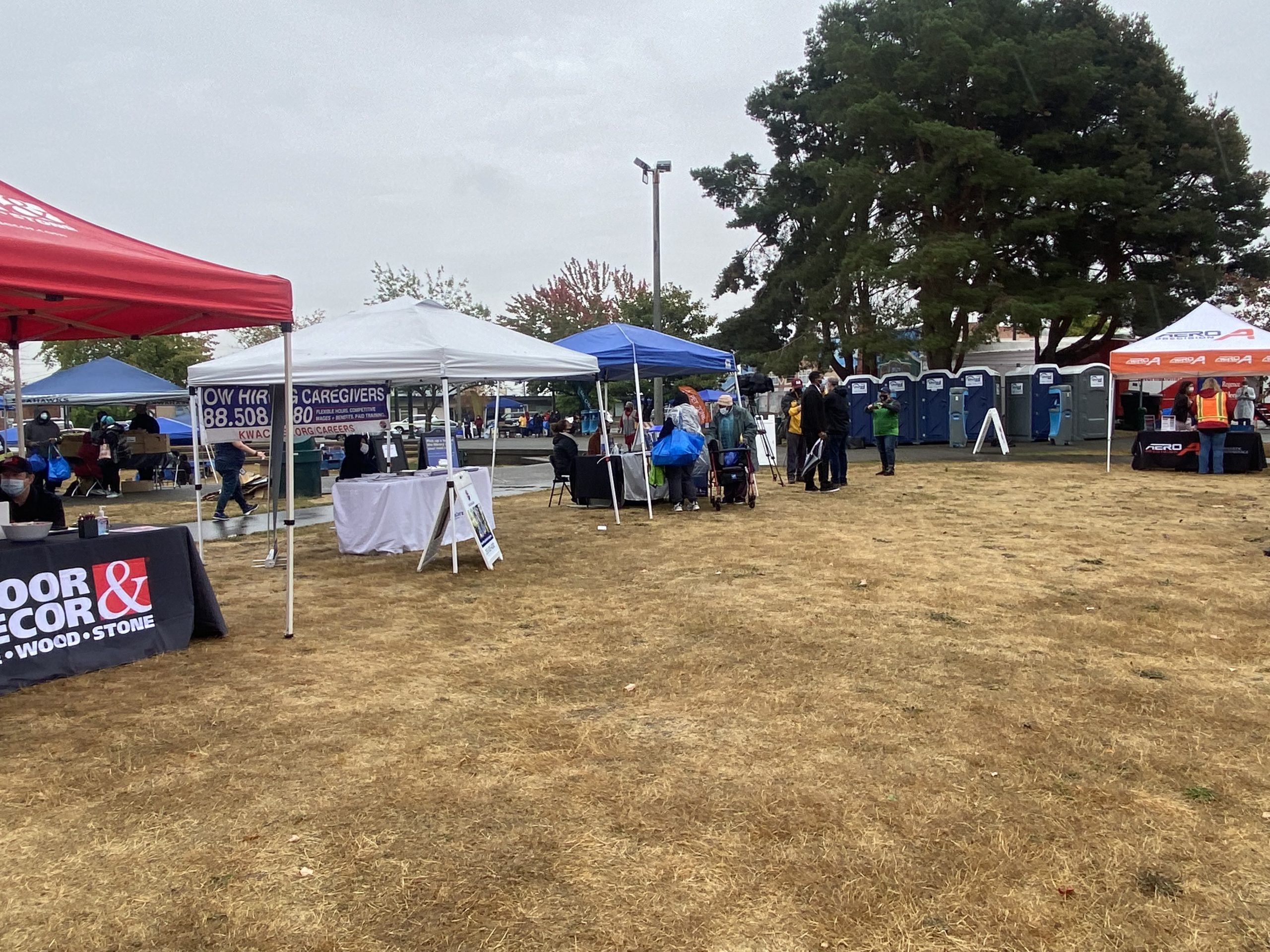
    It was pouring rain on September 17, but that didn’t stop community organizations and employers throughout Pierce County from joining together at People’s Park in Tacoma to connect residents with resources for housing and employment opportunities.

    More than 160 people attended Hire 253, many of whom are experiencing homelessness. The event featured 30 employers who are actively hiring and organizations with resources to help attendees overcome barriers. The job fair also hosted mobile units with services for attendees, including medical, dental, laundry, vaccinations, HIV & Hepatitis C testing, and more.

    Employers participating in the job fair reported a significant amount of engagement.

    “It was amazing! Even better than I expected it to be,” said Jimmy Peterson from LiUNA Local 252. “Even though it was raining the whole time, it was great… I can’t wait to be a part of more [Hire 253 events].”

    There were also many referrals to WorkSource and Goodwill for additional vocational services.

    This event could not have happened without the support of 100 volunteers who gave their time and talent to help make this event a success. A HUGE “Thank you!” to each one of you.

    Check out these videos/stories below to see media coverage of the event.

    We can’t wait to see you at the next HIRE 253!